Packaging does much more than just hold a product. It serves as your silent salesperson and protects fragile items. It creates the unforgettable first impression when a customer finally gets their hands on the item. For businesses launching a new product line or trying to optimize costs, choosing the right packaging format is the most crucial decision.
Among all the possible packaging options that are available in the current market. There are two major options in retail and e-commerce, which are rigid boxes and folding cartons.
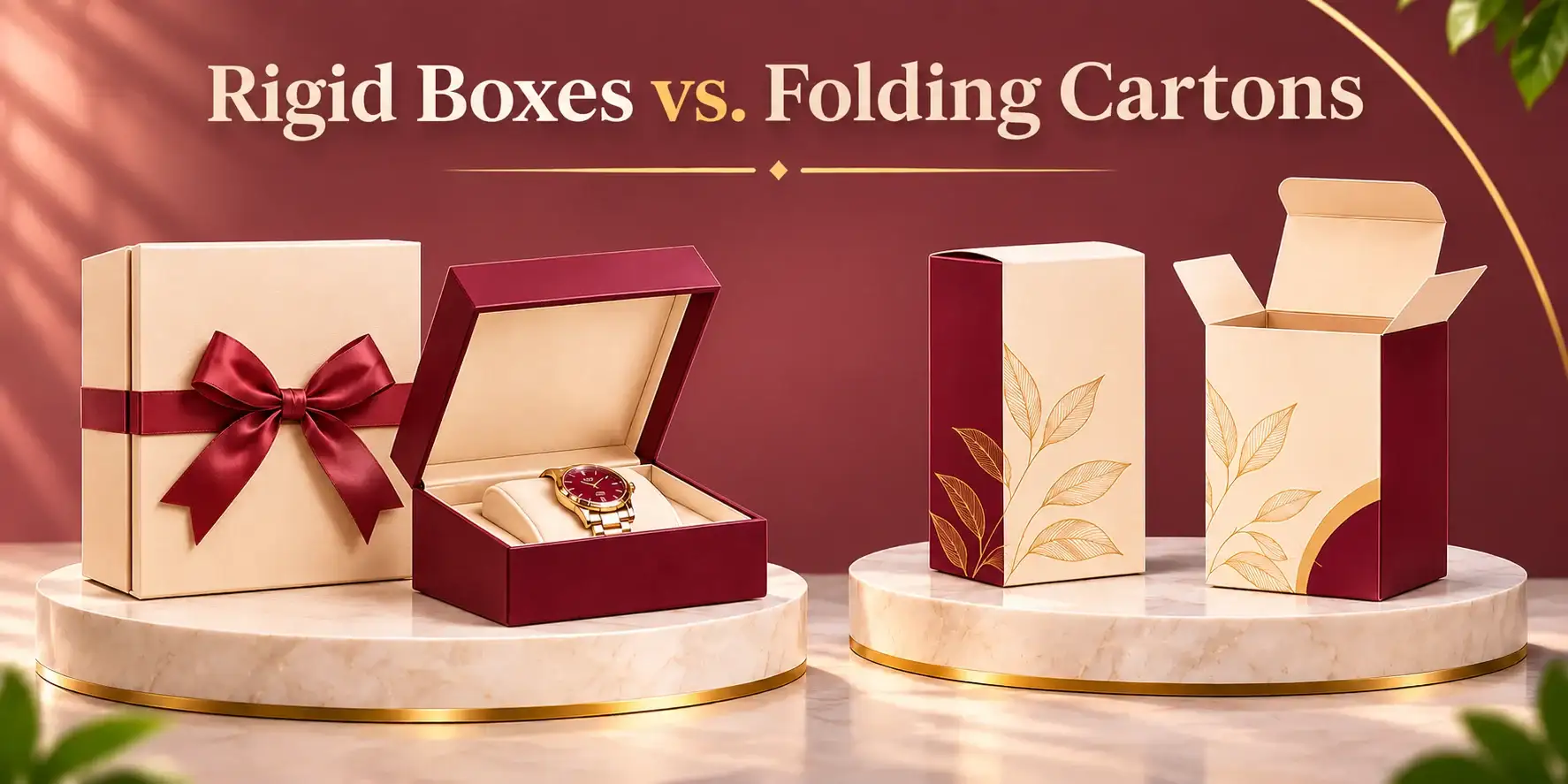
At first, these two packaging options may seem quite similar. Both are equally capable of being designed with full color printing, custom finishes, and attractive branding features. Folding cartons are built for mass production, lightweight, and high-volume retailing, while the rigid box is designed for strength and presentation.
So if you have been wondering about what makes rigid boxes the best packaging option, then you are in the right place. This guide covers everything that you should know about choosing the right packaging.
Introduction to Packaging Fundamentals
Now imagine yourself holding two different things, a luxury watch that comes in a rigid, heavy box with a magnetic closure. And a lightweight facial serum or eyeliner box you just picked up from the beauty store aisle.
Both are packaged in boxes that are brightly printed and carry the brand logo. But both come from completely different worlds. The wristwatch is not something that will bend even when you try due to its rigid box. On the other hand, a serum or eyeliner box, however, started its life as a flat piece of paperboard that was creased into shape at the last minute.
This simple example will help you understand the basic philosophy of rigid boxes and folding cartons.
Comprehensive Comparison Table
| Feature | Rigid Boxes | Folding Cartons |
|---|---|---|
| Primary Material | Heavy greyboard/chipboard (800–2000+ GSM) | Thin Paperboard (SBS, CUK, CRB, 250-600 GSM) |
| Assembly State | Ships pre-assembled (non-collapsible) | Ships and stores completely flat |
| Storage & Warehouse Space | High requirement (takes up significant space) | Low requirement (flat-packed efficiency) |
| Durability & Protection | Exceptionally high (resists crushing & impact) | Moderate (Suitable for lightweight, protected goods) |
| Perceived Brand Value | Premium, luxury, high-end, keepsake quality | Standard retail, practical, disposable |
| Custom Inserts | EVA foam, PE foam, molded pulp, velvet trays | Paperboard partitions, simple folded tabs |
| Finishing Capabilities | Foil stamping, embossing, debossing, soft-touch, wrap paper, etc | Offset printing, spot UV, gloss/matte aqueous coatings, etc |
| Primary Use Cases | Jewelry, watches, luxury cosmetics, electronics, gift sets | Pharmaceuticals, food, cereal, software, cosmetics |
| Unit Cost | Higher investment per box | Low, cost-effective for large runs |
Deep Dive Into Rigid Boxes
When brands want to make a bold statement and provide an unboxing experience that customers will remember. They go for the rigid packaging.
What Makes a Box “Rigid”?
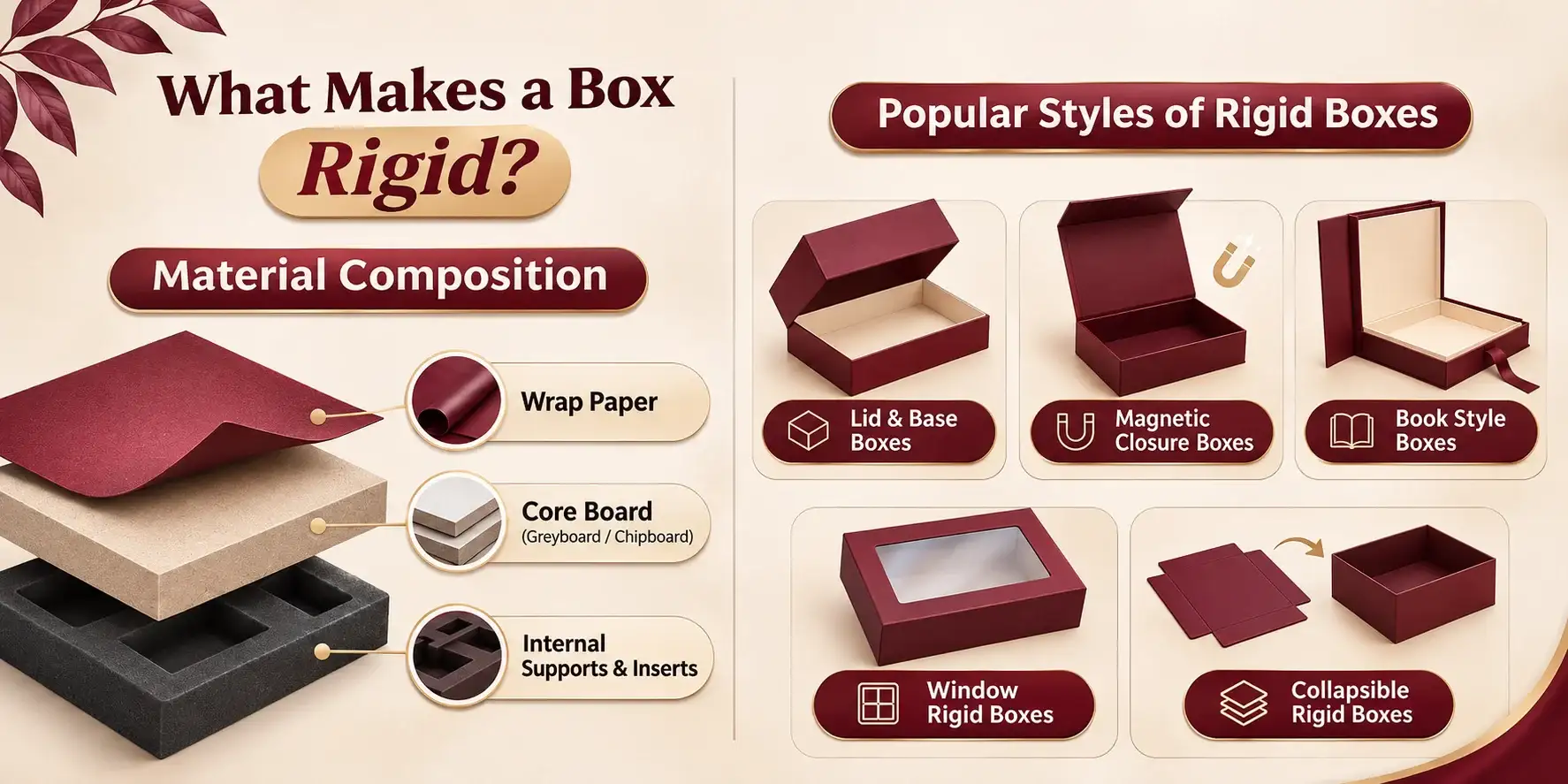
A rigid box is also known as a set-up box in the packaging industry. It is considered an extremely rigid box due to its permanent nature. These boxes are put together at the factory with thick and dense paperboard cores, usually 800 GSM or higher. After gluing, corner taping, and wrapping, these boxes will always have the same shape.
The weight and rigidity of the boxes will immediately show that they are something premium. Customers sense high-quality and unique items packed in the box.
Material Composition: What Goes Into a Rigid Box?
Rigid boxes have strong structures and luxurious textures due to their multilayer construction:
- Luxury Rigid Board (Greyboard / Chipboard): This is the sturdy structure of the box. It can be made of recycled paper pulp to provide thickness, heaviness, and resistance to crushing. The higher the GSM, the more dense and durable the box will be.
- Wrap Paper: Greyboards are usually covered in decorative papers. Art paper, kraft paper, and velvet-touch papers are used to wrap the core board. Here is where offset printing, PMS color matching, and special graphics are applied.
- Internal Supports & Inserts: Rigid boxes often contain custom molded EVA foam, molded pulp, or rigid paper board inserts. These inserts hold fragile items tightly to prevent any movement while the box is being transported.
Popular Styles of Rigid Boxes
It is quite amazing how rigid boxes can be structurally customized. At The Rigid Boxes, we provide our customers with many different styles, depending on what industry you need your boxes for. Here are some options for boxes given below:
- Lid & Base Boxes (Two-Piece Boxes): It consists of a base tray and an additional lid, which either totally or partially closes it. It is a simple and elegant design. Perfect choice for fashion items, footwear, presents, etc.
- Magnetic Closure Boxes: This style consists of hidden magnets in the flap and the front wall of the box. Once closed, they make a snap sound. It stays locked up tight without the need for any tape or other accessories. It is ideal for business gifts and luxurious cosmetics.
- Book Style Boxes: This box is open like a hardcover book, usually equipped with magnetic flaps or ribbon ties. It is a perfect choice for skincare kits and premium gift options.
- Window Rigid Boxes: In this style, a hole is cut out of the lid or front cover using a transparent sheet. It gives an inside view of the product without opening it.
- Collapsible Rigid Boxes: These boxes are designed with structural creases and corner adhesive strips. They are shipped completely flat to save immense shipping and warehousing costs, then assembled into a heavy, rigid box in seconds right before use.
Deep Dive Into Folding Cartons
While strong boxes rule in luxury industries, folding cartons are undeniably the most versatile option for commercial and e-commerce distribution networks.
What Makes a Carton “Folding”?
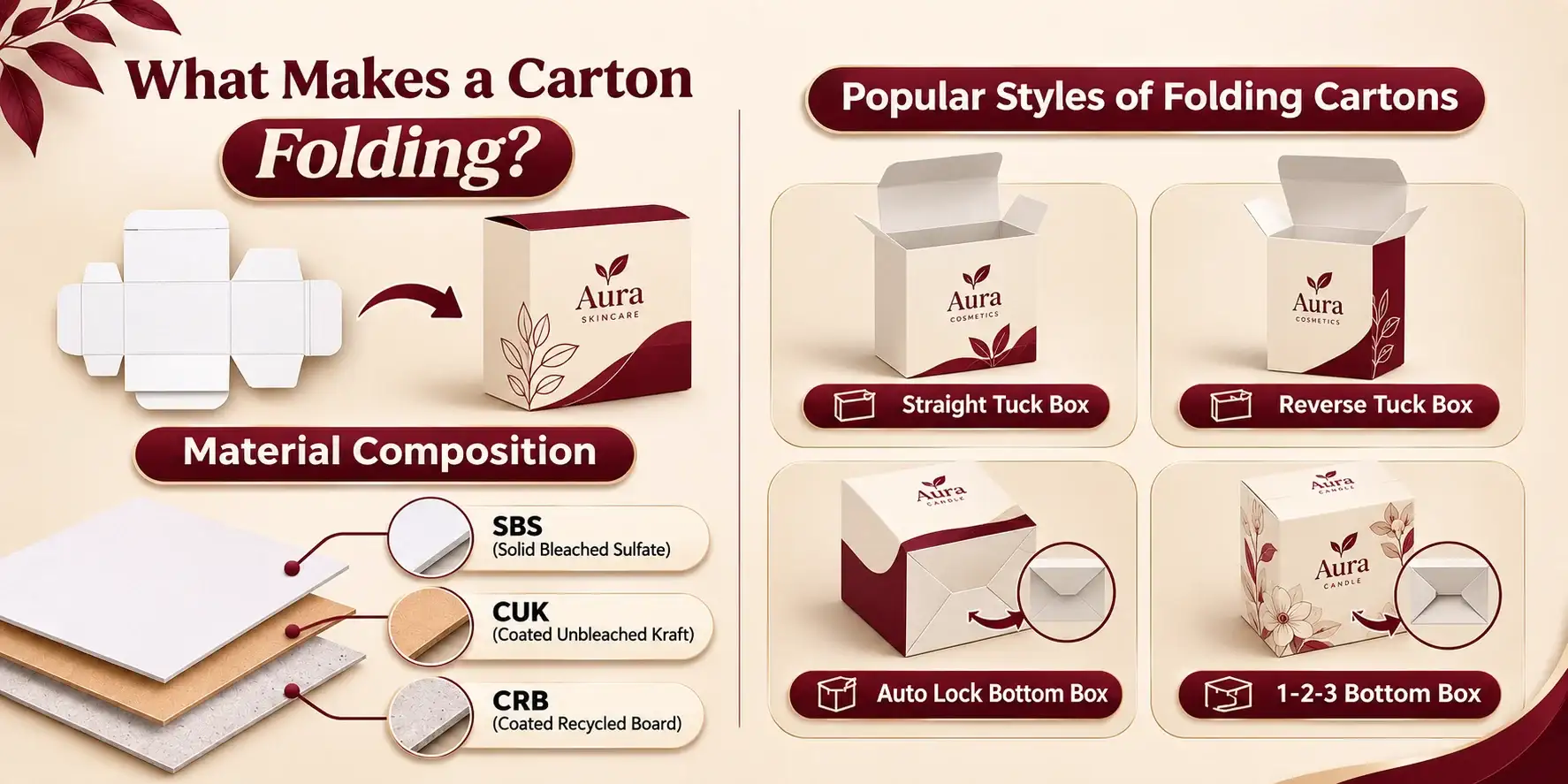
Folding cartons are the lightweight packaging options made of thin paperboard. The printing, cutting, and scoring of folding cartons are done at the packaging warehouses. But they are delivered to the business fully flat.
The process of folding, creasing, and locking of these cartons is done by packaging machinery or the warehouse workers.
Material Composition: What Is Used in the Making of Folding Cartons?
These boxes are made from lighter yet more flexible boards, which are efficient in terms of cost and quality.
- Solid Bleached Sulfate (SBS): The premium material made of virgin wood pulp and is white on both sides. This board provides excellent print quality suitable for pharmaceutical and food items.
- Coated Unbleached Kraft (CUK): Brown on one side and white on the other due to clay coating. This board has higher tear resistance and strength. Therefore, it is preferred for carrying beverages and bulky retail products.
- Coated Recycled Board (CRB): The board is made from 100% recycled paper stock. It is budget-friendly and environmentally sustainable.
Popular Styles of Folding Cartons
Folding carton boxes are produced in different styles with specific types of closures:
- Straight Tuck Boxes: The flaps on both ends tuck into the same direction from the same front to back. Perfect choice for light retail goods or cosmetics.
- Reverse Tuck Boxes: One end of the flap folds forward while the other folds backward. The arrangement helps in better usage of paper for printing and cost reduction.
- Auto Lock Bottom Box: The box features bottom flaps that have pre-applied glue. It folds automatically and locks when the box is folded. The design suits a bit heavy-weight products like candles, etc.
- 1-2-3 Bottom Box: The bottom of the box is assembled in a particular pattern. This design provides locking without using any glue or tape.
Head-to-Head Comparison: Rigid Boxes vs. Folding Cartons
Selecting proper packaging material involves assessing the performance of each box. Here are some important aspects through which brands can compare them.
Structural Strength & Protection
Rigid boxes provide maximum durability and resistance against crushing or folding due to their rigid construction. This is combined with custom foam inserts that ensure maximum protection of delicate products such as glass, ceramics, wine bottles, or instruments.
On the other hand, folding cartons are made from paperboard of varying thickness from 12 pt to 28 pt. Folding cartons provide an average level of protection against dust and careless handling of goods. They do not withstand external stacking or pressure.
Brand Perception and the Unboxing Experience
The weight of rigid boxes, their smooth tactile finish, special foam inserts, and different closures create instant appeal. These boxes can be used again for precious items such as jewelry, watches, etc.
Sophisticated printing can give a folding carton a very professional appearance on the retail shelf. These boxes can never replace the unboxing experience of a rigid box. Folding cartons are virtually always recycled right before the package is unpacked.
Cost Effectiveness & Production Volume
Specialized machines, rigid material, and substantial hand assembly work (wrapping, corner taping, and gluing) are involved in the making of rigid boxes. This is the reason they are more expensive per unit.
The production of folding cartons involves high-speed and fully automatic die cutting and gluing machines. That's why they are very economical.
Shipping, Storage & Logistics Efficiency
Rigid boxes come preassembled and therefore do not fold down. Storage of 10,000 rigid boxes in a warehouse will require a huge amount of space. These boxes can take up to 20 pallets. Folding cartons transport and store completely flat. Thousands of cartons can be accommodated in one pallet.
Customization, Finishing, and Flexibility
Brands can seamlessly integrate features such as magnets, ribbons, and sliding drawers with die-cut foam inserts. Rigid boxes also offer high-quality printing processes such as embossing, debossing, foil stamping, etc.
Folding cartons allow bold printing and window patching with different coatings. Because of their thin paper material, these boxes lack the capability to accommodate weighty magnetic closures or dense foam inserts. They also offer embossing, debossing, foil stamping, etc.
Why Rigid Boxes Are Better Than Folding Cartons?
Although folding cartons may be very suitable for high volume retail industries. Rigid boxes will take the lead in terms of factors that contribute to product value, customer satisfaction, and brand reputation. To create a leading brand, charge premium prices, and protect valuable products, rigid boxes are the ultimate choice.
This is how rigid boxes excel over folding cartons:
Unmatched Structural Integrity & Heavy Crush Resistance
Folding cartons are vulnerable to crushing and dents under mild pressure. One small creased corner at the retail shelf can ruin your customer’s ability to pay the full price.
Rigid boxes are manufactured using heavy duty chipboards that are thicker than the normal paperboard. These boxes will guarantee the safety of your products while in transit. They will save you return costs due to damage to the packaging.
Premium Aesthetics and Instant Perception of High Value
Human beings immediately judge the quality of any item through its weight, feel, and tactile sensation. If an item is packed in a light and flexible folding carton, it automatically seems like an ordinary item. However, if the same product is kept inside a heavy and sturdy rigid box, it immediately seems like a valuable asset.
A rigid box packaging solution automatically gives any brand the edge of being able to set premium prices because of the added value that is inherent in it.
Superior Protection for Delicate Items
In case of transporting delicate products like wine bottles. Perfumes, cosmetics, and a folding carton alone would not be sufficient. Additional layers of bubble wrap or inner packaging would also be needed.
This concern will be solved with the help of rigid boxes. The solid walls serve as a rigid shell that protects from shock, vibrations, or any drops. With proper EVA foam inserts, brands can ensure that their products will arrive intact.
Unforgettable Unboxing Experience & Social Media Impact
In the age of modern e-commerce, the process of unboxing plays a critical role in organic marketing. Shoppers adore creating and posting videos about unboxing products on social media. Rigid boxes make the process of unpacking a product an exciting experience. People love to create content if they find something eye-catching.
Reusability, Extended Lifespan, and Keeping Your Brand in View
The one and only lifecycle of folding cartons consists of throwing them away in the recycling bin immediately after opening.
On the contrary, rigid boxes are retained for future use because of their attractiveness and robustness and are used for storing jewelry, office supplies, personal items, and cosmetics. Each time customers reuse your box, your company logo gets showcased in their household or office without any additional expenditure.
Important Message: If your main target is to cheaply place some product on the shelves, folding cartons will be the best choice. However, in case you are interested in creating luxury brand recognition, you can go for rigid boxes.
Industry Applications: Where Each Format Shines
To find out what kind of packaging will fit your products, consider how major brands from various industries apply the two types of packaging. Given below are some options:
Where Rigid Boxes Dominate
- Luxury Fashion & Apparel: Expensive boutique apparel, silk ties, leather belts, and custom made shoes are packed in lid and base rigid boxes.
- Jewelry & Watches: Watches and luxury jewelry are packed in custom jewelry boxes that have special inserts so they do not move during transit.
- Consumer Electronics: Expensive smartphones, wireless headphones, and other electronics are packed in with special compartments for all cables and accessories.
- Cosmetics and Fragrance: High end perfumes and skincare lines are presented in elegant custom cosmetic boxes with magnetic closure or book style desgins.
- Corporate & Seasonal Gifting: Subscription and corporate holiday gifting involve rigid packaging because it is the main part of the gift.
Where Folding Cartons Dominate
- Food & Beverages: Boxes for cereals, frozen foods, dry pasta, tea, and beverages are completely based on folding cartons because of fast and hygienic packaging.
- Pharmaceutical and Healthcare: OTC medicine, prescription medicine, vitamins, and diagnostic kits use folding cartons since they can hold the mandatory labeling information.
- Personal Care & Home Care: Soap, boxes of toothpaste, light bulbs, and small household products use these boxes due to their low cost.
Environmental Impact and Sustainability Considerations
The modern market demands sustainability from both consumers and brands. Rigid boxes and folding cartons have a common feature: they are made of paper. The lifecycles of rigid boxes and folding cartons differ:
- The Lifecycle of a Rigid Box: Rigid boxes consume more material and energy for production. But the great durability and attractiveness of rigid boxes make people use them again and again for different purposes, such as storing important documents or keeping jewelry.
- The Lifecycle of a Folding Carton: The purpose of folding cartons is their only use. The customer takes out the product and puts the carton in a recyclable bin. Since they require less material for production, they have a reduced carbon footprint at first.
Most of the manufacturers, including The Rigid Boxes, use greyboard and wrapping paper made of 100% recycled PCW (post-consumer waste) material along with non toxic soy based inks.
Tips to Choose the Right Packaging for Your Product
There are a few crucial elements that have to be taken into account when choosing the most suitable packaging to guarantee safety and aesthetics. When you have to choose between a custom rigid box and a folding carton, taking into consideration these core business elements will help you make a better choice:
- Product value and price point
- Shipping and protection requirements
- Retail environment & shelf presentation
- Customer’s unboxing experience
- Production volume
Final Thoughts
There is not one packaging solution that is going to work well in every possible scenario out there. Every rigid box and folding carton has been designed and manufactured specially for a certain purpose.
If your company’s concern is about building the image of your brand and providing better structural protection to products, rigid boxes are the only option. These boxes also give customers a better unboxing experience.Here at The Rigid Boxes, we are experienced in creating unique custom rigid packaging. That will perfectly fit your product and support the image of your brand.
If you want to know more about packaging, get a quote from us.
Frequently Asked Questions
Are rigid boxes stronger than folding cartons?
Yes, because rigid boxes are made of thick, dense material, which can work better even under pressure.
What box style works well for fragile products?
Rigid boxes are the best choice for such products that are delicate and need extra protection.
Are rigid boxes more expensive than folding cartons?
Yes, because they require thicker material during manufacturing. They also consume huge space during shipping, which increases their shipping cost as well.
Are folding cartons always cheaper?
In manufacturing cost, yes. They are made on high speed automated lines. And they're ideal for high volume retail.
Which format is more sustainable?
Both are paper based. Folding cartons have less raw material, which is why they go directly into recycling after being unpacked. And rigid boxes can be reused for a long time.
Do rigid boxes ship flat or pre assembled?
They are fully pre assembled in their shape and cannot be collapsed.
Are rigid boxes reusable?
Yes, and customers reuse these boxes as keepsake storage for jewelry or documents.
What is the main material used in rigid boxes?
Rigid boxes are made from dense greyboard (chipboard) wrapped in decorative art paper, kraft paper, or textured linen stock.