A rigid box (set-up box) is more than just a container for a product. It is a premium packaging solution made from thick paperboard that retains its shape and offers a great presentation. However, there is more to this premium-quality packaging.
When a business sells products that are of high quality, packaging needs to do more than just hold the item. It should protect the product and create a great presentation across every order. Rigid box packaging provides a durable structure. They are made of strong material to give a luxury feel. The demand for rigid boxes is growing, with the global rigid market projected to increase from USD 8.34 billion in 2025 to USD 8.84 billion in 2026. Its value is expected to reach USD 15.84 billion by 2036 at a CAGR of 6.0%.
Rigid boxes help businesses package products for retail display and even gifting, from luxury cosmetics and jewelry to electronics and corporate gifting. Buyers can choose from different box styles and other attributes to meet their product requirements. This article provides a detailed guide on what rigid boxes are and how the packaging works.
What Is Rigid Box Packaging?
This is a type of packaging made from thick paperboard that maintains its shape during regular handling. They are also known as set-up boxes because they are assembled into their final shape during manufacturing rather than shipped flat. They consist of a structural board wrapped in printed and decorative paper. Additional components like custom inserts and interior linings can be added according to your requirements.
What Makes Rigid Packaging Different?
Be it an apparel box or a food box, thickness is one of the main factors that makes rigid packaging different from other packaging options. The stability of the structural board is another factor that makes it unique. Rigid boxes retain their shape without the customer having to fold or assemble the main structure.
Anatomy of a Rigid Box
These boxes consist of various components that work together to provide structure and visual appeal. They can help businesses communicate their specifications to the packaging manufacturers. Here are the components of these boxes:
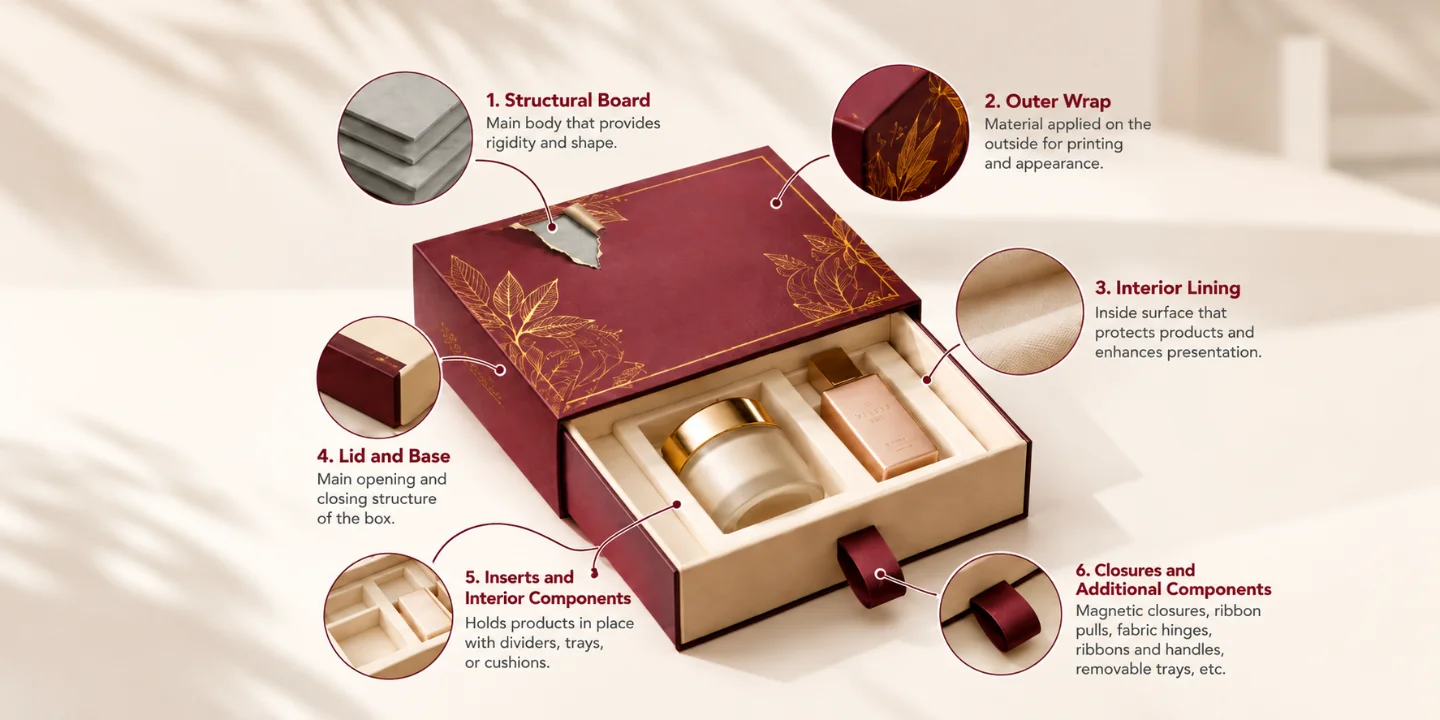
Structural Board
This is the main body of the box that provides the rigidity needed to maintain the shape of the package. It is available in different thicknesses and densities for different designs and weights. Grayboard is one of the examples of structural boards. It is also known as chipboard and is used for many purposes.
Outer Wrap
It is the material applied to the outside of the structural board. This shows the appearance of the box and offers a surface for printing. Common options include coated and uncoated paper. Other outer wrap options include textured and specialty paper to be wrapped using automated machines to avoid any bubbles or wrinkles.
Interior Lining
This is the inside surface of the rigid box. It can help prevent direct contact between the product and the structural board. Products with delicate surfaces may require soft or non-abrasive lining.
Lid and Base
They make the main opening and closing structure of many rigid boxes. The lid fits over a separate base that holds the products in a traditional two-piece design.
Inserts and Interior Components
Inserts are used to hold products in specific positions inside the box. There are other interior components like fabric linings and padded cushions inside the rigid box. You can even include dividers and compartments to enhance the functionality.
Closures and Additional Components
Rigid boxes can include different closures and accessories to make them more usable. Most of the common options include:
- Magnetic closures
- Ribbon pulls
- Fabric hinges
- Ribbons and handles
- Removable trays
How Is Rigid Box Packaging Made?
The making of rigid packaging includes different stages. Each one helps in making the overall box stronger and more durable. Mentioned next is the complete process of how the rigid boxes are made:
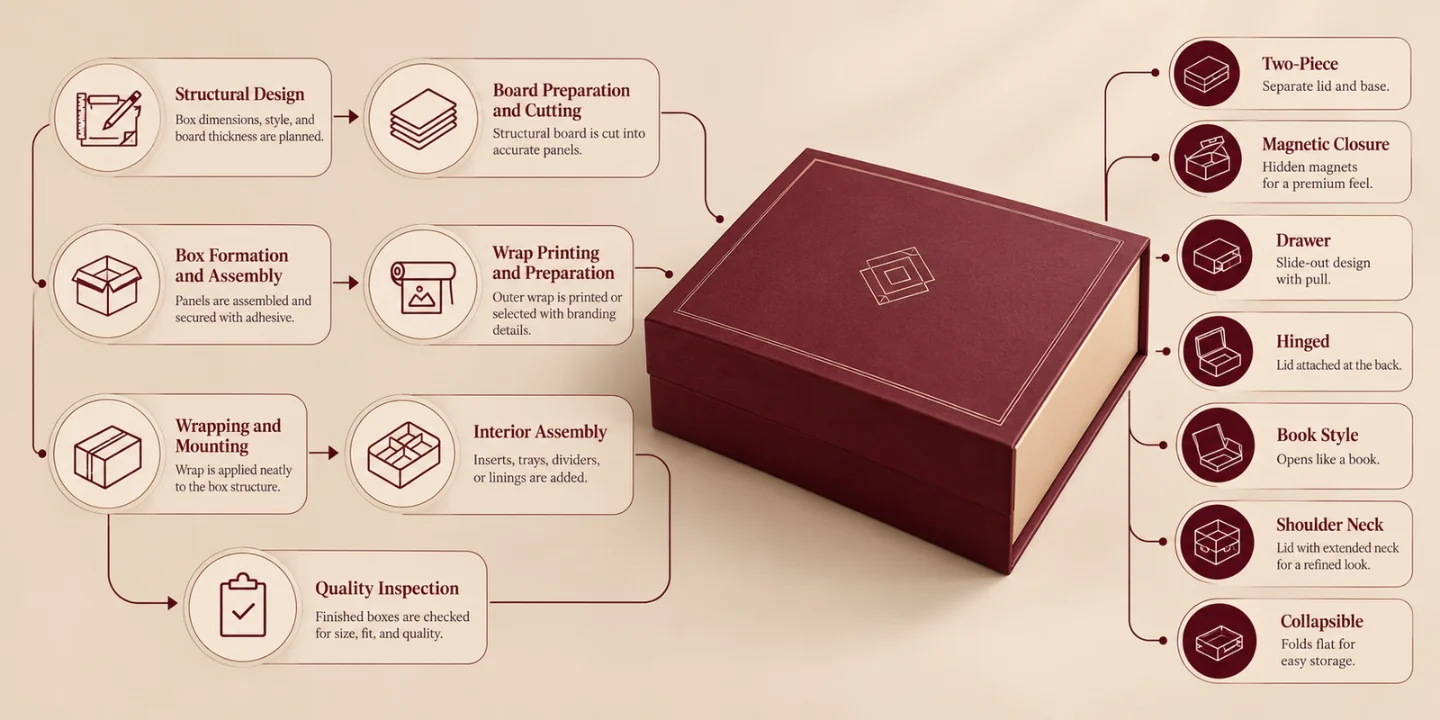
Structural Design
The process starts with the structural design according to the dimensions of the products and the requirements of the packaging. The box style and board thickness are determined at this stage.
Board Preparation and Cutting
The selected structural board is now cut into panels according to the design that has been selected. Accuracy is important in cutting because even a small variation can affect the fit of the lid or the alignment of the base.
Box Formation and Assembly
Here, the cut panels are now assembled to create the main structure of the box. You can apply adhesives and other suitable joining methods to secure the components. Manufacturers must make sure that the corners and edges are aligned correctly.
Wrap Printing and Preparation
Once the box is formed and assembled, the printing takes place here. The outer wrap is printed or selected according to the approved design. Printing may include logos and other product details.
Wrapping and Mounting
The prepared wrap is applied to the structural board using an adhesive. This step requires attention to corners and edges to make sure the entire box is accurately wrapped.
Interior Assembly
Interior linings and inserts are added to the box in this stage. You can also include other components like dividers and trays to make the box more functional.
Quality Inspection
The completed boxes are inspected against the approved specifications. Inspection may cover dimensions and other attributes to be checked.
Main Rigid Box Packaging Styles
There are different styles of rigid boxes that serve different needs and requirements. Some of the most common styles are discussed below:
Two-Piece Rigid Boxes
This one consists of a separate lid and a base tray that holds the product. Two piece boxes style is good for luxury products like jewelry and apparel accessories.
Magnetic Closure Rigid Boxes
You get a magnetic closure with the hinged lid that fits over the base. Items like premium cosmetics and electronic boxes are stored in magnetic closure rigid boxes.
Drawer Rigid Boxes
This style has an inner tray that slides into an outer sleeve. Drawer rigid boxes are good for stationery and compact gift sets.
Hinged Rigid Boxes
These boxes have a hinged lid connected to the base. They can be used for watches and premium accessories to be stored in them.
Book Style Rigid Boxes
It resembles the cover of a book; this is why it got its name. This style box has a cover that opens to reveal the product inside. You can display luxury gifts in this style box.
Shoulder-Neck Rigid Boxes
This style has an additional inner structure between the lid and the base and is known as the shoulder or neck. Luxury retail products and premium gifts are stored in this style of box.
Collapsible Rigid Boxes
You can fold down the box when it is not in use. This is why they are called collapsible rigid boxes. Ecommerce brands and gifting companies use them for their products.
Materials Used in Rigid Box Packaging
The choice of material affects the strength of the box. You can fulfill branding requirements and protect the product with the right selection of materials. Provided below are some of the options:
Structural Board
One of the widely used materials for rigid boxes is grayboard. The thickness is usually 1.5 mm to 3 mm (36 pt to 120 pt). It is made from compressed paper fibers and is available in different thicknesses and grades.
Outer Wrap Materials
The material for outer wrap includes coated and uncoated art paper. Other materials are textured stock and specialty paper. You can also use kraft paper for the outer wrap of the rigid boxes.
Interior Materials
The selection of interior material depends on the fragility and shape of the box. It also depends on the weight of the material. You can use paperboard for inserts for lightweight products. Foam inserts can provide cushioning, and molded pulp is good for products that need shaped support.
Printing and Finishing Options for Rigid Boxes
You can turn a simple rigid box into branded packaging with the right printing and finishing options. The right choice depends on the artwork and the target market.
Printing
You can get your company’s logo and other artwork printed on the rigid boxes in the printing option of your choice. Common printing methods include offset printing and digital printing. Many manufacturers also offer screen and flexographic printing. These printing methods can be done with color systems like CMYK and PMS.
Lamination and Finishes
This is a thin protective film applied to the printed surface of the rigid box. It provides resistance to everyday scuffs and scratches. You can get it done in gloss and matte finishes. Other options include a soft-touch finish and an aqueous coating as well.
Foil Stamping
A metallic or colored foil is applied to a selected area or on the entire box using heat pressure. The common choices include gold and silver, but other foil colors are also available.
Embossing and Debossing
The selected design on the rigid box is raised above the surface in embossing. Whereas debossing presses the design into the material. Most custom luxury rigid boxes have embossing or debossing done on them.
Spot UV
This method applies a coating to the selected areas of the surface of the rigid boxes. It creates a contrast between coated and uncoated sections to make certain design elements stand out.
Specialty Papers and Textures
You can add visual and tactile qualities with specialty paper that standard printed paper may not offer. They are available in different options, like textured and embossed. You can also get them in metallic finishes and decorative stocks.
Inserts and Interior Support for Rigid Boxes
A well-designed insert keeps the product organized and improves how it is presented when the box is opened.
Product Positioning
Inserts hold products in a defined position inside the box. They help prevent items from shifting during routine handling.
Protection and Cushioning
Cushioning helps reduce movement and absorbs some impact during handling. A decorative rigid box with a thin insert may not provide sufficient protection for glass or electronic items.
Compartments and Dividers
They separate more than one item within one box. You can use them for gift boxes and accessories.
Custom-Fitted Inserts
They are made and cut according to the shape and size of the product. You can include cavities and raised platforms to make the item fit perfectly.
Where Is Rigid Box Packaging Used?
These boxes are used in many industries that need strong and customizable packaging. Here are some of the practical uses of rigid boxes:
- Luxury and Premium Products: Designer accessories and limited edition products are packed in rigid packaging to create a high-end presentation.
- Jewelry and Watches: Rigid boxes can be made for jewelry items like rings and necklaces. You can also use them for watches, bracelet, and other accessories.
- Cosmetics and Beauty Products: Cosmetics brands use rigid boxes for skincare sets and makeup collections. The custom compartments in them can hold bottles and jars of makeup items like foundation and mascara.
- Electronics and Technology: These boxes are used for headphones and other electronic devices. They can include custom inserts and accessory trays to make them more functional.
- Gifts and Presentation Sets: Another practical use of rigid boxes is corporate gifting and even seasonal gift collections. You can customize the box with dividers and magnetic closures.
- Retail and E-Commerce Products: Companies use rigid boxes for retail products where the appearance of the packaging influences purchases. E-commerce businesses also choose rigid boxes for premium orders and gifting purposes.
Benefits and Limitations of Rigid Box Packaging
Rigid boxes offer numerous benefits when it comes to packaging products in a premium way. But they also have some limitations as well.
Benefits of Rigid Boxes
- Better Structure: The strong material of these boxes gives a great shape and overall structure while preventing any compression.
- Incredible presentation: You get a great look for the box with printed wraps and decorative finishing.
- Personalized product fit: The customized size and shape of the box and inserts let companies organize items to fit accurately.
- Reusable packaging: Most of the rigid boxes can be reused for storage and organization of small items as per their condition and construction.
Limitations of Rigid Boxes
High unit cost
More material is required for rigid boxes as compared to other boxes. This eventually increases the unit cost.
Complexity in material
The foam, magnets, and mixed material components can make recycling more difficult.
More storage volume
Set-up boxes take up more space before use because they are already assembled.
Costs of weight and freight
The extra material like dividers and inserts can increase the weight and shipping volume of packaged products.
Rigid Boxes vs Other Types of Packaging
Rigid boxes are one of several packaging options businesses can choose from. Folding cartons, corrugated boxes, and flexible packaging also serve different purposes. Comparing these packaging types helps in the evaluation of structure and cost. Let us have a look at the comparison of each with rigid boxes:
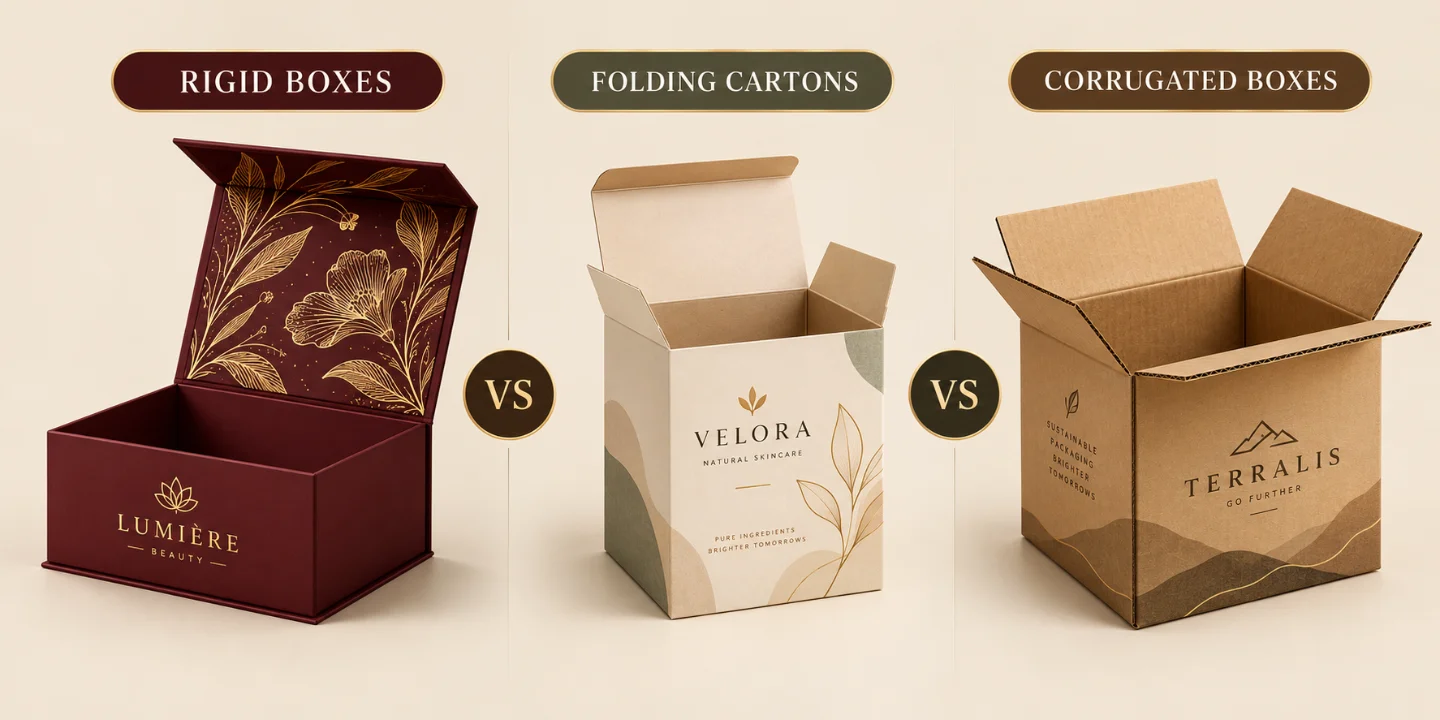
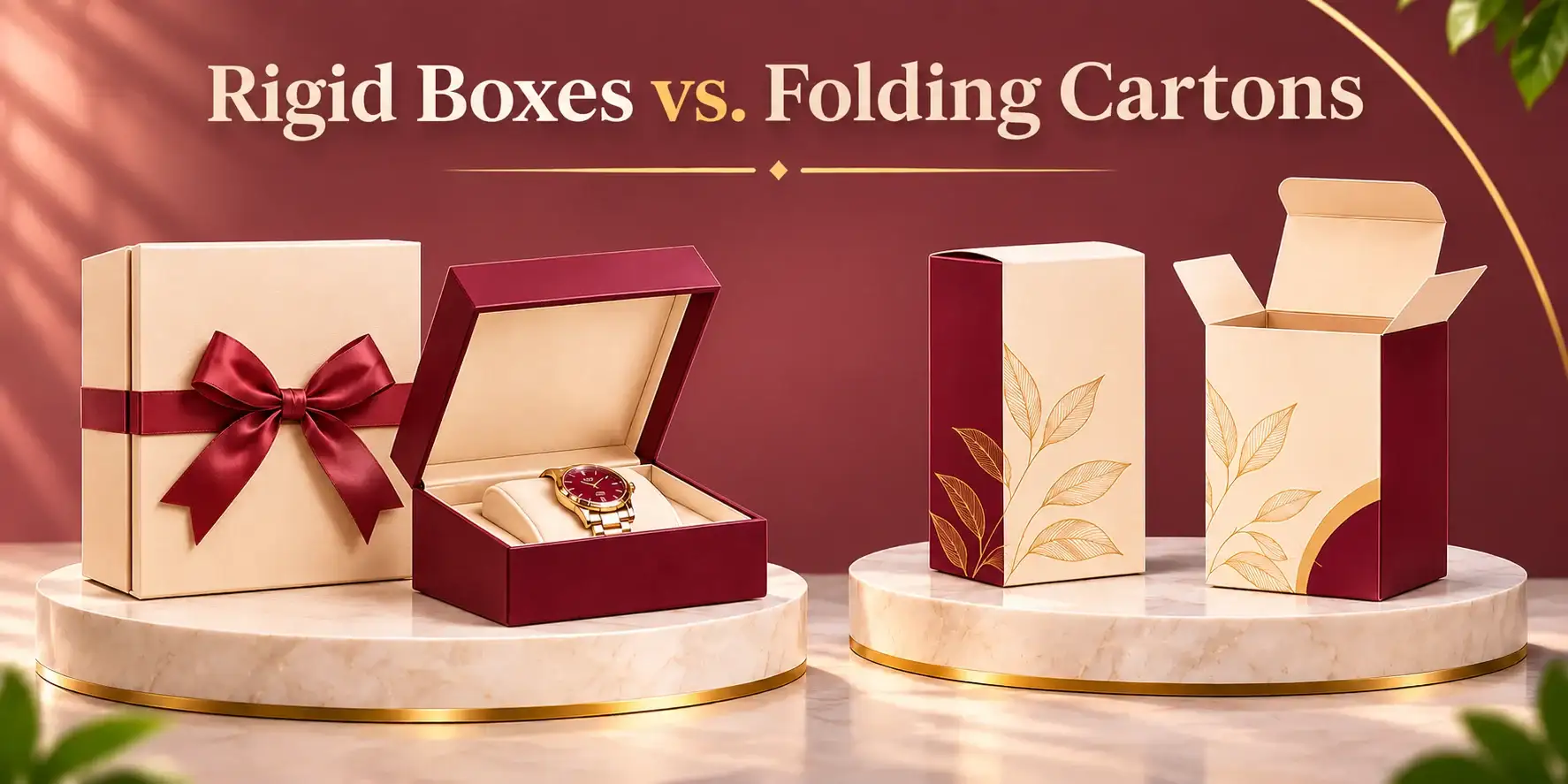
Rigid Boxes vs Folding Cartons
| Comparison Factor | Rigid Boxes | Folding Cartons |
|---|---|---|
| Material | Thick paperboard or rigid board | Thin paperboard |
| Structure | Maintains its shape and is strong | Lightweight and foldable |
| Assembly | Usually supplied pre-assembled | Folded and assembled during packing |
| Storage | Requires more storage space | Flat-packed to save space |
Rigid Boxes vs Corrugated Boxes
| Comparison Factor | Rigid Boxes | Corrugated Boxes |
|---|---|---|
| Material | Thick greyboard or rigid board | Fluted board between linerboards |
| Structure | Solid and maintains its shape | Lightweight structure with cushioning potential |
| Main Purpose | Premium product packaging and presentation | Shipping and distribution |
| Protection | Supports products and helps prevent crushing | Helps absorb impacts and protect goods during transit |
Rigid Boxes vs Flexible Packaging
| Comparison Factor | Rigid Boxes | Flexible Packaging |
|---|---|---|
| Material | Thick paperboard | Flexible films or paper-based material |
| Structure | Maintains a defined shape | Bends or conforms to the product |
| Storage | Requires more space when assembled | Often uses less storage space |
| Protection | Provides structural support and helps resist crushing | Can provide a moisture barrier depending on the material |
How to Choose the Right Rigid Box Packaging
The selection of the right rigid box packaging depends on many factors. The considerations mentioned in the section below help companies make the right decision:
Consider Product Dimensions
You must measure the length, width, and height of the product. Businesses should also consider if the dimensions of the items vary between units or not.
Consider Product Weight and Fragility
It is important to keep in mind the weight of the product and the level of interior support.
Choose the Right Box Structure
Choose the style of the rigid box according to the way customers and employees will access the product. The structure should support both the product and the intended packing process.
Determine Interior Support Requirements
You must decide whether the package needs an insert or any other component like a tray or divider. This reduces the risk of incompatible dimensions and helps the manufacturer plan the interior.
Select Materials and Finishes
Choose the material according to the requirements of your products. You can include the printing and finishes as per your budget and design.
Consider Storage and Shipping
Another thing to consider is the storage space to be occupied by the rigid boxes. Check the package weight and dimensional charges for shipping.
Consider Quantity and Budget
Budget is another important factor that you must keep in mind when opting for the rigid packaging for your product. The order quantity affects the per-unit cost. This is why you must pay attention to the quantity as well.
What Affects the Cost of Rigid Box Packaging?
The pricing of these boxes depends on the complete construction rather than a single material or dimension. Buyers should understand the main cost factors before requesting quotations. Here are some of the elements that affect the overall cost of the packaging:
- The size of the box: larger boxes need more board and wrap material, which will eventually increase the cost.
- Thickness and grade of board: heavier boards or other specialized ones can increase the material costs.
- Box structure: complicated hinges and other components might require additional assembly.
- Quantity of order: the material arrangements influence the unit price of the box.
- Freight and storage: the dimensions of the finished box and delivery location affect the total landed cost.
Rigid Box Packaging Specifications Buyers Should Know
It is helpful for manufacturers to produce boxes when the specifications are clear. This helps the product to fit and meet operational requirements of the business. Buyers should know the following details before buying the rigid box:
Box Dimensions
The internal and external dimensions of the boxes should be determined. They should be measured in length x width x height.
Board Thickness
Another factor is the thickness of the board because it affects the rigidity of the boxes. Buyers should ask the manufacturer to recommend a suitable board grade and thickness.
Product Clearance
Product clearance is the additional space required around the item or insert so the product fits without excessive pressure. This should be assessed together with the insert material and variations.
Insert Dimensions
You should know the overall dimensions of the insert. This helps in understanding whether the product fits well in each cavity and compartment.
Closure Requirements
Learn how the box should open and close. Also make sure the lid opens as intended without damaging the wrap for hinge structures.
Finishing Specifications
Mention the artwork and all the finishing requirements like lamination and foil details. Provide the print-ready files and approve a proof before production.
Order Quantity
You should state the quantity that you require and also know whether the order will be delivered in one shipment or multiple batches.
Sustainability Considerations for Rigid Box Packaging
The material and construction of the packaging affect its overall sustainability. Rigid boxes offer eco-friendliness along with durability to leave a smaller carbon footprint. Here are some of the points you should consider when checking the sustainability of these boxes:
Recycled and Paper-Based Materials
Rigid boxes can be manufactured using recycled paperboard and other paper-based materials to reduce reliance on virgin resources. Businesses should check the recycled content and sourcing certifications of their packaging materials.
Recyclability
The recyclability of rigid boxes depends on their materials and additional components. Boxes made primarily from paperboard may be recyclable when local facilities accept them. However, plastic laminations and mixed materials can make recycling more difficult.
Reuse and Product Lifespan
A well-made rigid box can serve several purposes after the original product has been removed. This extended use can help reduce the need for replacement storage containers.
Material and Finish Selection
The materials and finishes used in rigid boxes affect their environmental impact. Choosing finishes and components carefully helps balance visual appeal and sustainability goals.
Questions to Ask a Rigid Box Manufacturer
Companies should confirm that the manufacturer can meet their requirements before placing a bulk order. The following questions can be asked to make the evaluation more useful:
- What rigid box styles can you manufacture for our product?
- Which board grades and thicknesses do you recommend?
- Can you produce boxes according to our exact internal dimensions?
- Do you provide structural design support and prototypes?
You can ask as many questions as you want to have a clear mind before placing the order.
Where to Get the Best Rigid Box Packaging?
You can get your rigid boxes made in high quality from The Rigid Boxes. Be it a magnetic closure box or a mailer box, you can get them made in rigid material from us. We offer unlimited customization options in terms of materials and sizes. You can also choose the shape and other attributes of the packaging according to your preferences. Apart from luxury rigid boxes, we also offer materials like cardboard and kraft to create packaging that complements your product. Place your order now from The Rigid Boxes and get the best out of your product packaging.
Frequently Asked Questions
What Is the Difference Between a Rigid Box and a Setup Box?
They both are the same term used interchangeably for the box made from thick paperboard. You can get these boxes made with personalization of your choice from The Rigid Boxes.
Are Rigid Boxes Always Made From Grayboard?
Grayboard is a common structural material, but other suitable paperboard grades can also be used. The outer wrap and interior components may also use different paper-based or non-paper materials.
Can Rigid Boxes Be Shipped Flat?
They are supplied assembled and therefore occupy more storage and shipping volume. Collapsible rigid boxes are designed to fold flat or into a reduced-volume format.
How Thick Is Rigid Box Board?
The board is available in different thicknesses according to the dimensions and intended load. There is no single thickness suitable for every application.
Do Rigid Boxes Need Inserts?
It is not necessary to add an insert to every rigid box. A simple box may hold products securely without one. However, fragile items or multi-product sets may require custom-fitted support.
Are Rigid Boxes Recyclable?
Most of these boxes use paperboard and paper wraps that can be recycled. But different material mixes of lamination and other components can make it difficult to recycle.
Are Rigid Boxes Suitable for Shipping?
They are good for packaging luxury products, but they are not designed to handle shipping conditions. Parcel delivery may expose the package to compression and repeated handling.
How Do I Choose the Right Rigid Box Structure?
Choose a structure that provides interior support. A prototype or sample pack-out can help verify the design before bulk production.
Conclusion
Rigid box packaging gives you a way to get the stability of structure and premium presentation. From two-piece gift boxes to magnetic closures, you can get the rigid boxes made with personalization of your choice. You can place an order in the quantity of your choice, with orders delivered at no shipping cost. Reach out to us and request a custom quote now.